



Social media, motherhood, and the quiet cost of comparison
There is a particular kind of exhaustion that can happen at the end of a long day with children. The house is finally quiet. The toys are still on the floor, tomorrow’s lunch boxes may need preparing, and there are a dozen small things you could do.
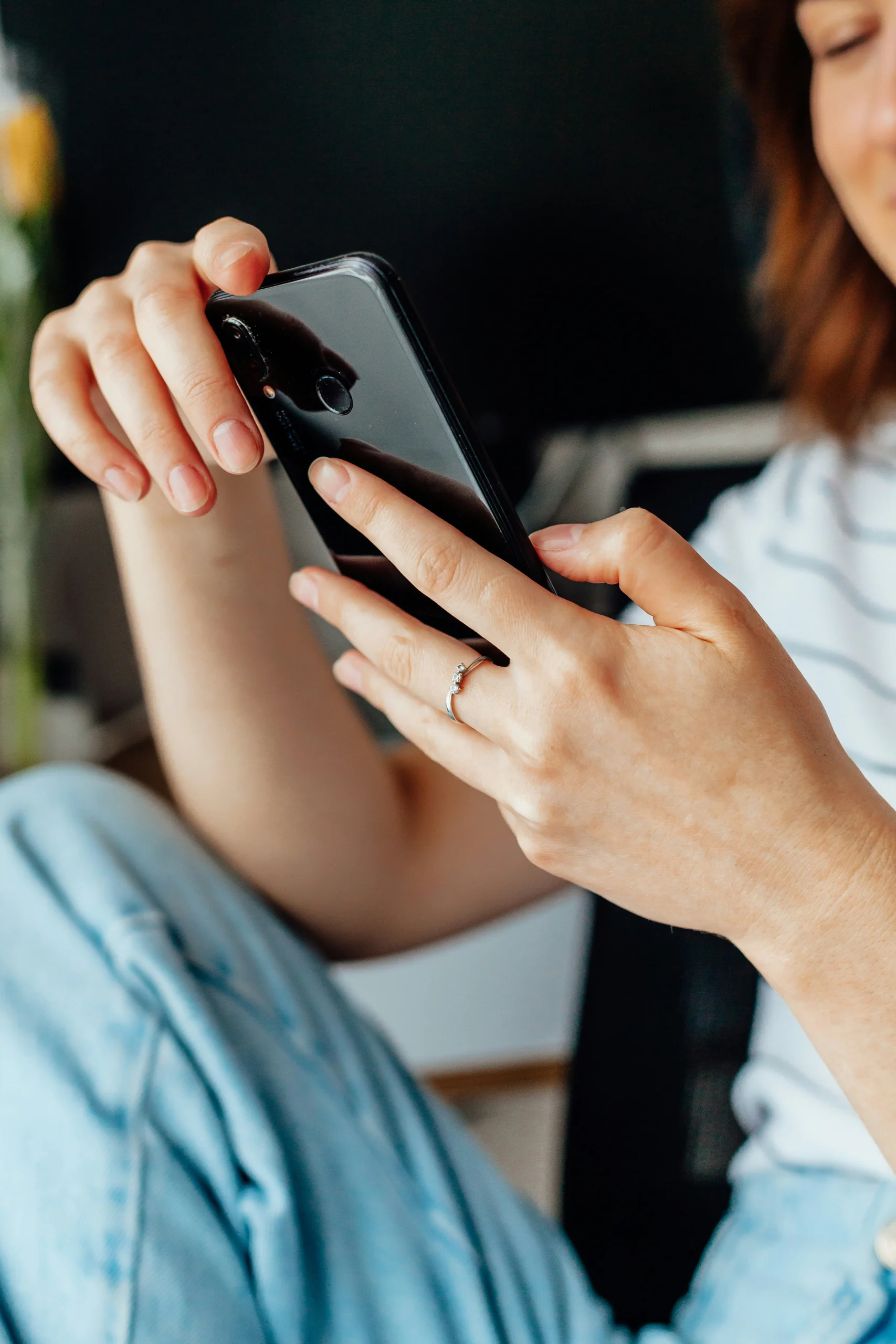
Instead, you pick up your phone for a moment. Just a quick look at Instagram. Someone is renovating a beautiful home. Another mother is sharing a nourishing dinner she prepared with her children. Someone else has found the perfect morning routine, started a new business, or taken her family on a weekend adventure.
You scroll. One video becomes another, and another. Perhaps you find yourself comparing your home, your body, your parenting, or the way you spend your time. Perhaps you discover a product you suddenly feel you need. Before you know it, half an hour has passed.
You put your phone down. And instead of feeling rested, you feel strangely dissatisfied. Maybe you recognise this feeling? I certainly do. And it makes me wonder: What happens when the time we spend looking at other people’s lives starts to take up space in our own?
Social media offers connection—and comparison
Social media is not inherently bad. It can help us stay connected, discover new ideas, learn from others, and feel less alone [1]. For mothers in particular, online communities can offer support and understanding that may be difficult to find in everyday life [2].
I experience this myself. I love sharing ideas, exploring the science behind topics that matter to mothers, and hearing that something I have posted has helped someone feel understood. Those interactions can be genuinely meaningful.
But social media also creates an unusual environment: we are constantly exposed to carefully selected fragments of other people’s lives. We rarely see the full picture. We see the renovated kitchen, not the financial stress behind it. The joyful family outing, not the argument that happened before leaving the house. The productive morning, not the exhaustion that followed—or the help that made it possible.
Even when we know this intellectually, the images can still influence how we feel. Psychologists have long studied social comparison: the tendency to evaluate ourselves by comparing our circumstances, abilities, or achievements with those of others. Social media offers almost endless opportunities for these comparisons, often within seconds and without us consciously choosing to make them [3].
For mothers, this can be particularly complicated. Expectations around motherhood are already demanding. We are often encouraged to be endlessly patient, emotionally available, health-conscious, organised, and devoted to our children—while also maintaining relationships, careers, homes, and identities of our own.
A review of research on social comparison and maternal mental health found that exposure to idealised portrayals of motherhood can be associated with poorer maternal well-being, particularly when it triggers unfavourable comparisons [4]. The evidence is still developing, and not every mother responds in the same way. Nevertheless, it offers an important reminder: the content we consume can shape how we evaluate ourselves and our lives [3; 4].
We may begin by looking for inspiration and end up feeling that we are falling short.
When inspiration becomes another expectation
One of the more subtle effects of social media is that it can turn almost anything into another thing we feel we should be doing [4]. We see a mother doing yoga before her children wake up, so we consider getting up earlier. We discover a beautiful lunchbox idea, so our ordinary sandwiches suddenly seem inadequate. We watch someone build a successful business while raising young children, and wonder why we struggle to find time for our own ambitions.
To me, even self-care can become a performance. We are told to regulate our nervous systems, drink more water, move our bodies, practise gratitude, keep a journal, spend time outdoors, and protect our mental health. Many of these things can be valuable. But when every helpful idea becomes another item on our mental to-do list, the pursuit of well-being can start to feel like another source of pressure.
This is where I think we need to ask a different question. Instead of asking, What else could I be doing to improve my life?, what if we asked, What is genuinely important to me—and what can I let go of?
There is a difference between discovering something that enriches our lives and collecting expectations that make us feel inadequate. We do not need to turn every inspiring idea into a personal project. We are allowed to appreciate someone else’s way of living without making it our own.
The attention we give away
Comparison is only part of the story. Another question is what happens to our attention. Many digital platforms are designed to make it easy to continue: a new video starts automatically, another post appears with a simple swipe, and there is always something else to discover. We do not necessarily decide to spend an hour online. We simply keep going. This can make our phone use feel less like a conscious choice and more like a habit that unfolds almost automatically [4].
And for mothers, attention is already in high demand. Our days often involve constant transitions: helping a child get dressed, answering a question, preparing food, remembering an appointment, comforting someone, and trying to finish a task in between. When we finally have a moment to ourselves, reaching for our phones can feel like an easy way to switch off. Sometimes that is exactly what we need: a little entertainment, a connection with the outside world, or a few minutes in which nobody needs anything from us [5].
But scrolling does not always provide the rest we are looking for. Sometimes it leaves us mentally stimulated, emotionally unsettled, or simply frustrated that our limited free time has disappeared [3; 5; 6]. It is worth distinguishing between using social media intentionally and opening an app almost by reflex. The amount of time we spend online matters, but so do our reasons for using it and how we feel afterwards.
A useful question is not just, How long was I on my phone? It is also, How did I feel before I picked it up—and how do I feel now?
Our children are watching—and we are human, too
As mothers, we naturally think about our children’s screen time. We consider how much television they watch, whether they need limits, and what kind of relationship with technology we want them to develop.
Yet it can be harder to apply the same curiosity to our own habits. Research into what is sometimes called parental technoference examines how phones and other devices interrupt interactions between parents and children. Reviews of this research suggest that parental device use can be associated with changes in parent-child interaction, including reduced responsiveness in some situations. A 2025 systematic review and meta-analysis also found associations between parental technology use in the presence of young children and several developmental outcomes [7]. However, much of the available evidence is observational, so these findings do not mean that every glance at a phone harms a child or that a single cause explains complex developmental outcomes.
The important point is not that parents must be perfectly present every minute. That would be another impossible standard. Children do not need our uninterrupted attention all day long. We are allowed to answer messages, organise family life, talk to friends, and take time for ourselves. We are human beings, not full-time entertainment services.
But there is a meaningful difference between choosing to check something and repeatedly being pulled away from the interaction in front of us. And perhaps there is an opportunity here: rather than treating screen boundaries as rules we impose only on our children, we can begin to think about the digital environment we want to create as a family. That might mean having phone-free meals, keeping devices away during bedtime routines, or deciding together when television is part of the day and when it is time to switch it off. It might also mean letting our children see us put our phones away—not because technology is bad, but because our attention is valuable.
The same principle applies to adults. Clear, realistic boundaries can reduce the number of decisions we have to make in the moment. We do not have to rely on willpower every evening if we have already decided where and when we want our phones to be part of our lives. And when we slip back into old habits? We can notice that without turning it into another reason to criticise ourselves.
What I learned from six years without Instagram
A few years ago, I spent six years without Instagram. Looking back, I can honestly say that I was happier without it. I had less exposure to other people’s carefully curated lives, fewer opportunities to compare myself, and less temptation to spend my time browsing things I did not really need.
That does not mean I believe everyone would be happier if they deleted their accounts. My experience is personal, not universal. Social media can provide genuine connection, education, creativity, and community [1]. And the way we use it matters.
Today, I am back on Instagram. I share content that I hope will be useful to other mothers, and I appreciate the thoughtful messages and positive feedback I receive. I also recognise the contradiction: while I want to encourage women to live more intentionally, I can still find myself caught in the evening scrolling loop. Sometimes I keep watching videos long after I intended to stop. Sometimes I browse products and feel the urge to order something I had not even wanted an hour earlier.
Knowing how these patterns work does not automatically make me immune to them. Understanding the science behind habits, attention, and behaviour is useful, but knowledge alone does not always change what we do when we are tired, overwhelmed, or simply looking for a little escape.
That is why I am trying to approach my own phone use with more awareness and clearer boundaries. I want to be more deliberate about when I use Instagram, why I open it, and how much space I want it to occupy in my life. I also want to remember that I can value the work I share online without needing to be online all the time. I can enjoy creating content and still choose to post less often. I can appreciate the community and still protect my attention. I can be grateful for the opportunities social media offers without accepting every demand it makes on my time.
For me, that is not a contradiction. It is part of learning to live according to my own values.
Small steps towards a life you don’t need to scroll away from
I do not think the answer is necessarily to delete every app, follow a strict digital detox, or become perfectly disciplined. Sometimes taking a break from a platform is exactly the right choice. At other times, smaller changes may be more realistic and sustainable.
The first step is simply to notice.
- Notice your triggers. Do you reach for your phone when you are bored, exhausted, lonely, or finally alone after a demanding day?
- Pay attention to how you feel. Which accounts leave you feeling inspired or connected? Which ones consistently leave you comparing, worrying, or wanting more?
- Make your boundaries specific. Instead of vaguely promising to scroll less, decide when you will check social media and when your phone will be out of reach.
- Reduce unnecessary temptation. Turn off non-essential notifications, move distracting apps off your home screen, or remove saved payment details if spontaneous shopping has become a habit. I put my phone in a drawer to decrease the temptation of checking it all the time.
- Make room for something real. Before opening an app, ask yourself what you might actually need: rest, movement, connection, a little time alone, or simply permission to do nothing.
- Be curious rather than critical. If you find yourself scrolling for longer than you intended, ask what made the habit appealing in that moment. Shame rarely creates a sustainable plan.
- Have a phone to-do list. This tip saves me all the time. As a mom you have a lot of mental load to juggle. You need to buy new clothes for the winter for your little one, a new beanie for the big brother, you need to write an email to the school principal, and oh, you forgot to say happy birthday to your best friend. Do not deal with it the moment it pops up in your head, instead have a piece of paper and a pen in a designated spot in your house. For me this is in the kitchen because I spent a lot of time there. I write down what I should not forget to buy or to take care of and deal with it after I put the kids to bed. This way I can concentrate, do it quicker than with the kids around and feel better because I have not used my phone 80 times that day.
You can try one small change for a week and see what happens. Perhaps you leave your phone in another room during bedtime. Perhaps you stop browsing when you notice that inspiration has turned into comparison. Perhaps you decide that evenings are for reading, stretching, talking to your partner, or doing absolutely nothing productive.
The point is not to replace scrolling with another list of self-improvement tasks. It is to create a little more space between an impulse and a choice.
And this idea reaches beyond our phones. The same questions can help us examine our routines, our commitments, the expectations we place on ourselves, and the way we organise family life. What are we doing because it matters to us? What are we doing because we feel we should? What could become lighter if we gave ourselves permission to choose differently?
This is at the heart of the work I care about at Sunlit Simplicity: helping mothers make space for themselves and build lives that reflect what genuinely matters to them. Not by adding more habits, demands, or expectations, but by questioning what they carry, letting go of what no longer serves them, and taking small, realistic steps towards what they want.
Because a good life does not have to look like the life we see on a screen. It does not need to be perfectly organised, aesthetically pleasing, or filled with impressive routines. It can be messy, ordinary, ambitious, restful, joyful, and difficult—all at once.
And perhaps one of the most useful questions we can ask ourselves is this:
Am I using this moment online to enrich my life—or am I scrolling past a life I would rather be present for?
We do not need to answer that question perfectly every day. We just need to give ourselves the opportunity to ask it.

You Don’t Have to Navigate This Alone
If you find yourself thinking:
- “I feel different than I used to.”
- “What worked before doesn’t work anymore.”
- “I want to feel more like myself again, but I don’t know where to start.”
Please know this:
You are not behind. You are responding to change. And that is a good thing. This season is challenging, but there is so much potential to grow.
If you would like support that is rooted in science and tailored to your individual season of motherhood, I invite you to book your free 15-minute consultation today. Together, we look at your current reality – your energy, your nervous system, your daily life – and build supportive strategies that are realistic, compassionate and sustainable.
Selected References
- 1
Pittman, M., & Reich, B. (2016). Social media and loneliness: Why an Instagram picture may be worth more than a thousand Twitter words. Computers in human behavior, 62, 155-167. https://doi.org/10.1016/j.chb.2016.03.084
- 2
Ilies, I. A. (2023). Postnatal depressive symptoms and social media use for support amongst mothers and fathers within the first year postpartum (Doctoral dissertation, Birmingham City University). https://www.open-access.bcu.ac.uk/id/eprint/14707
- 3
Newport, C. (2019). Digital minimalism: Choosing a focused life in a noisy world. Penguin.
- 4
Tate M. K. (2023). The Impact of Social Comparison via Social Media on Maternal Mental Health, within the Context of the Intensive Mothering Ideology: A Scoping Review of the Literature. Issues in mental health nursing, 44(9), 854–870. https://doi.org/10.1080/01612840.2023.2238813
- 5
Mary, S. M., Duschinsky, R., Davis, L., Dunnett, S., & Coughlan, B. (2025). Representations of motherhood in the media: A systematic literature review. Information, Communication & Society, 28(1), 169-186. https://doi.org/10.1080/1369118X.2024.2348020
- 6
Ansari, S., Iqbal, N., Asif, R., Hashim, M., Farooqi, S. R., & Alimoradi, Z. (2024). Social Media Use and Well-Being: A Systematic Review and Meta-Analysis. Cyberpsychology, behavior and social networking, 27(10), 704–719. https://doi.org/10.1089/cyber.2024.0001
- 7
Toledo-Vargas, M., Chong, K. H., Maddren, C. I., Howard, S. J., Wakefield, B., & Okely, A. D. (2025). Parental technology use in a child’s presence and health and development in the early years: A systematic review and meta-analysis. JAMA pediatrics, 179(7), 730-737. https://doi.org/10.1001/jamapediatrics.2025.0682